



You’ve probably heard someone say, “SEO takes time.” That’s true—but it doesn’t always mean starting from zero. Sometimes the fastest traffic gains come from pages that are already close to ranking well. These are known as low-hanging fruit keywords, and they’re often hiding in plain sight inside your Google Search Console or SEO tool. If you’re new to SEO, learning how to find low hanging fruit keywords can help you generate more organic traffic without writing dozens of new blog posts.
What Are Low Hanging Fruit Keywords for SEO?
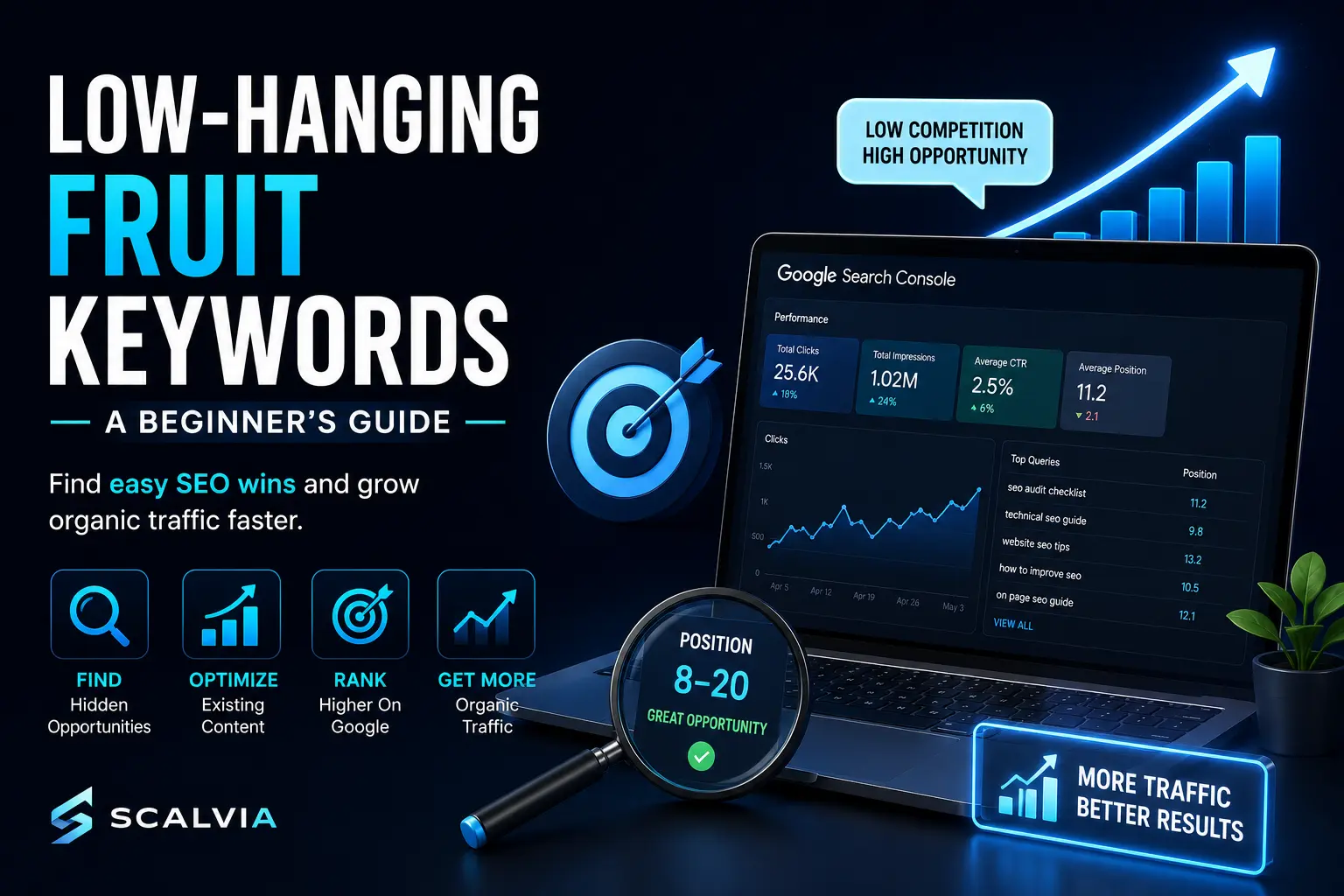
Low hanging fruit keywords are search terms that your website already ranks for but hasn’t fully capitalized on yet. Most often, these keywords sit between positions 8 and 20 in Google Search results.
Think of it this way: Google already trusts your content enough to show it on the first or second page. With a few improvements, you have a realistic chance of moving into the top five results, where the majority of clicks happen.
Unlike highly competitive keywords that may take months to rank for, low-hanging opportunities usually require less effort because you’re building on existing authority rather than starting from scratch.
Why Low-Hanging Fruit Keywords Matter
Many website owners spend all their time creating new content while ignoring pages that are already close to performing well. In my experience, updating an existing page often delivers faster results than publishing a brand-new article.
The biggest advantages include:
- Faster ranking improvements
- Higher organic traffic with minimal investment
- Better return from existing content
- Improved click-through rates
- Stronger topical authority
Instead of chasing impossible keywords, you’re making the most of work you’ve already done.
How to Find Low Hanging Fruit Keywords
Use Google Search Console
Google Search Console is the easiest place to begin.
Open the Performance report and sort your queries by average position. Look for keywords ranking between positions 8 and 20 with a healthy number of impressions.
For example:
| Keyword | Position | Monthly Impressions |
|---|---|---|
| SEO audit checklist | 11.4 | 8,900 |
| Website SEO tips | 13.2 | 6,700 |
| Technical SEO guide | 9.8 | 5,200 |
These are excellent candidates because Google already considers your page relevant.
Check High-Impression Keywords
Sometimes a page ranks in position four or five but receives a surprisingly low click-through rate.
This usually means your title tag or meta description isn’t convincing enough.
Ask yourself:
- Would you click this result?
- Does the title answer the searcher’s intent?
- Is there a benefit or number included?
A better title alone can increase clicks without changing rankings.
Look for Long-Tail Variations
One page can rank for hundreds of search queries.
Review every keyword associated with a page. You’ll often discover related searches you never intentionally targeted.
Suppose your article focuses on keyword research. Google may also show it for:
- beginner keyword research guide
- free keyword research methods
- SEO keyword planning
- keyword research for blogs
Adding these naturally to headings, FAQs, or supporting paragraphs strengthens topical relevance.
How to Improve Rankings for Low-Hanging Fruit Keywords
Finding opportunities is only half the process. The next step is optimization.
Refresh Your Content
Google rewards pages that remain useful over time.
Update:
- Outdated examples
- Screenshots
- Statistics
- Internal links
- FAQs
- Missing sections
Even small improvements can help Google reassess your content.
Strengthen Internal Links
Internal linking is still one of the simplest SEO improvements.
If multiple pages discuss similar topics, connect them using descriptive anchor text rather than generic phrases like “read more.”
This helps search engines understand your site’s structure and passes authority between related pages.
Match Search Intent
Sometimes rankings stall because the content doesn’t completely answer what users expect.
Review the current top-ranking pages and ask:
- What questions do they answer?
- What information is missing from your article?
- Can your content be more practical?
Adding genuinely useful information almost always beats stuffing more keywords onto the page.
Common Mistakes Beginners Make
Many beginners misunderstand low-hanging fruit keywords and accidentally waste time.
Avoid these mistakes:
- Only checking search volume instead of ranking position
- Ignoring click-through rate
- Publishing duplicate articles instead of updating existing ones
- Overusing exact-match keywords
- Forgetting to improve internal linking
SEO is rarely about doing one big thing. It’s usually about improving dozens of small details consistently.
Quick Summary
Key Takeaways
- Low-hanging fruit keywords are keywords already ranking around positions 8–20.
- Google Search Console is the best free tool for finding them.
- Prioritize keywords with strong impressions and realistic ranking potential.
- Refresh existing pages before creating new content.
- Improve titles, internal links, and search intent alignment for faster SEO gains.
- Regular content updates help maintain rankings over time.
Frequently Asked Questions
What are low hanging fruit keywords for SEO?
Low hanging fruit keywords are search terms your website already ranks for but hasn’t reached the top positions. Improving these pages often leads to faster organic traffic growth than targeting brand-new keywords.
How do I find low hanging fruit keywords?
Use Google Search Console and filter keywords ranking between positions 8 and 20. Focus on queries with high impressions, then optimize the related pages for better relevance and click-through rates.
Why are low-hanging fruit keywords important?
Because Google already recognizes your page as relevant, improving these keywords usually requires less effort than ranking for highly competitive terms from scratch.
How often should I check for low hanging fruit keywords?
Review your Search Console data at least once a month. Regular analysis helps you identify new opportunities, monitor ranking changes, and keep existing content competitive.
Conclusion
SEO doesn’t always require creating more content. Often, the biggest wins come from improving pages that are already close to success. By learning how to find low hanging fruit keywords, monitoring Google Search Console, and regularly updating your best-performing pages, you can increase rankings, attract more qualified visitors, and grow organic traffic without reinventing your content strategy. For beginners and experienced marketers alike, it’s one of the smartest SEO habits to build.