



Introduction
Running a small business involves more than delivering a good product or service. You also need to attract customers, manage enquiries, control expenses and make sure your marketing budget is being used effectively. Google Ads can help your business reach people searching for what you offer, but managing campaigns properly requires time, attention and a clear strategy.
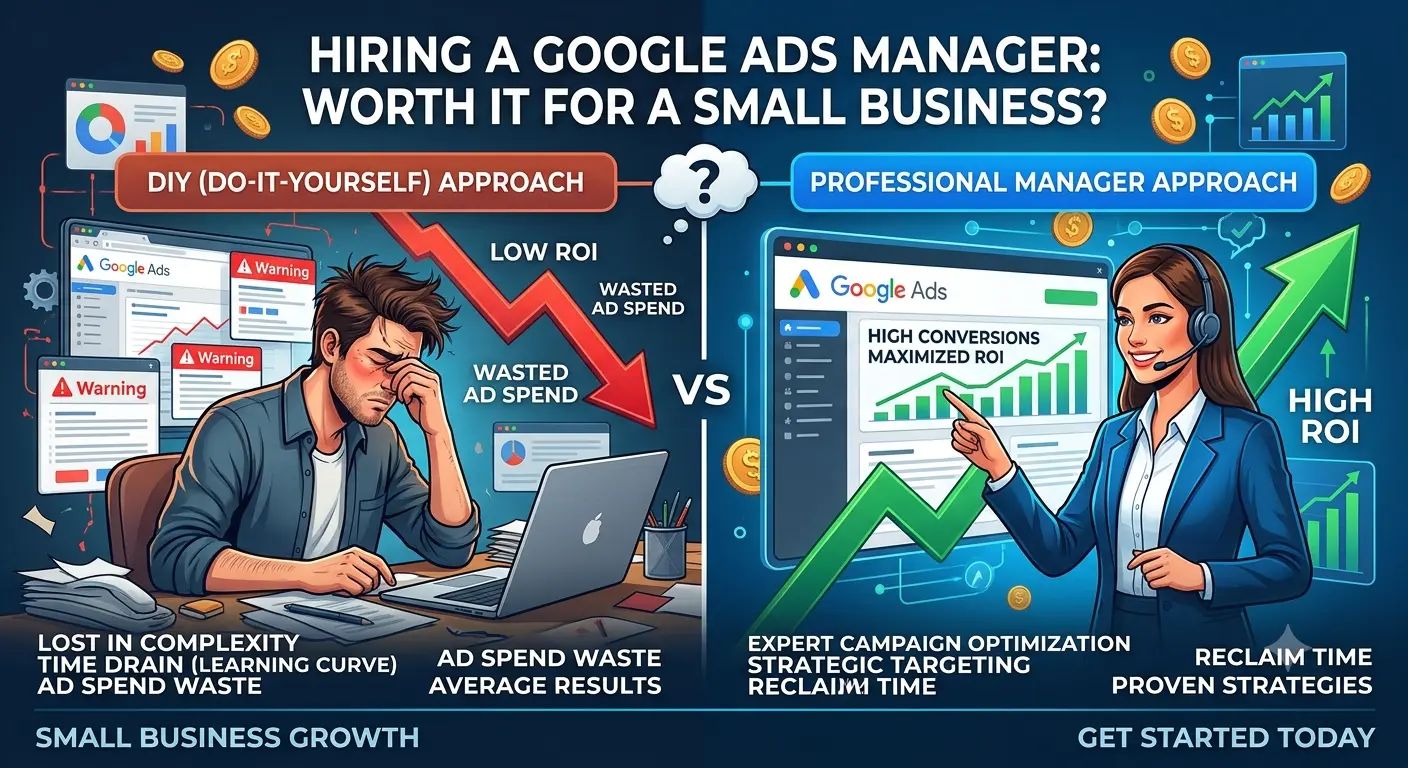
That raises an important question: is hiring a Google Ads manager worth it for a small business, or should you manage the campaigns yourself?
The answer depends on your advertising budget, campaign complexity, available time and ability to measure results. A business with one straightforward campaign may be able to manage its advertising internally. However, a company spending regularly on ads without understanding which clicks generate enquiries may benefit from professional management.
For Australian businesses, the decision should not be based on the management fee alone. You also need to consider wasted ad spend, tracking accuracy, lead quality and the potential value of new customers.
This guide explains what a Google Ads manager does, how much professional management may cost, when hiring one makes sense and how to decide whether the investment is right for your business.
Quick Answer: Is Hiring a Google Ads Manager Worth It?
Hiring a Google Ads manager can be worthwhile when the value of better campaign management, saved time and improved decision-making outweighs the management fee. However, hiring a manager does not guarantee lower costs, more leads or higher sales.
Professional management may be particularly useful if:
- Your business already spends money on Google Ads but struggles to generate enquiries.
- You receive clicks without enough conversions.
- You are unsure which keywords are wasting your budget.
- Conversion tracking is missing or unreliable.
- Campaign optimisation takes time away from running your business.
- You want a clearer understanding of your advertising performance.
On the other hand, managing campaigns yourself may be reasonable if your budget is very limited, your campaigns are simple and you have the time to learn and monitor them.
The key is to compare the full cost of each option with the business outcomes you need.
1. What Does a Google Ads Manager Do?
A Google Ads manager plans, monitors and improves advertising campaigns to help a business achieve its marketing objectives. Depending on the agreement, this may include campaign setup, keyword research, ad creation, conversion tracking, budget management and performance reporting.
The exact responsibilities vary between providers, so small businesses should confirm what is included before signing a contract.
Keyword research and targeting
A manager researches the terms potential customers use when searching for products or services. They also review search intent to determine whether a query is likely to attract a relevant customer.
For example, a Perth plumber may want to reach people searching for an emergency plumbing service rather than users looking for plumbing courses or DIY tutorials.
Keyword targeting should reflect the business’s services, location, margins and capacity to handle new work.
Campaign setup and structure
Campaigns need an appropriate structure so that budgets, targeting, ads and landing pages work together.
A manager may organise campaigns by service, product category, location or customer intent. They can also review campaign settings to make sure the ads are reaching the intended audience.
Poor structure can make performance harder to understand and budget allocation less effective.
Ad copy and testing
A Google Ads manager writes and tests ad messaging to communicate the business’s offer clearly. This may involve testing headlines, descriptions, calls to action and different value propositions.
The aim is to attract relevant clicks rather than simply maximise the number of people who visit the website.
Budget and bidding management
Managers monitor spending and adjust campaign settings based on performance, business objectives and available data.
Google Ads offers automated bidding options, including Smart Bidding strategies that use conversion-related signals to optimise bids. These features can reduce the need for manual bid adjustments, but they do not eliminate the need for accurate tracking, sensible campaign settings and ongoing oversight.
Google explains how these systems work in its official Smart Bidding documentation.
Conversion tracking and reporting
A campaign needs reliable measurement to establish whether its clicks lead to meaningful actions.
Depending on the business, conversions may include completed enquiry forms, phone calls, purchases or bookings. A manager may configure or review conversion tracking, check data quality and report on the results.
Without reliable tracking, it becomes much harder to distinguish campaigns that attract valuable customers from those that simply spend money.
Ongoing optimisation
Campaign management should involve more than switching ads on and checking the dashboard occasionally.
Depending on the account, ongoing work may include reviewing search terms, adding negative keywords, testing ads, checking landing pages, assessing conversion quality and adjusting budgets.
These activities help the business make informed decisions about where its advertising money should go.
2. What Does Google Ads Management Cost?
There are two separate costs to understand when advertising on Google:
- Advertising spend: The money paid to Google for the campaign.
- Management fee: The amount paid to the freelancer, consultant or agency managing the campaigns.
These costs should be evaluated separately, even when a provider presents them as part of one package.
Typical management fees in Australia
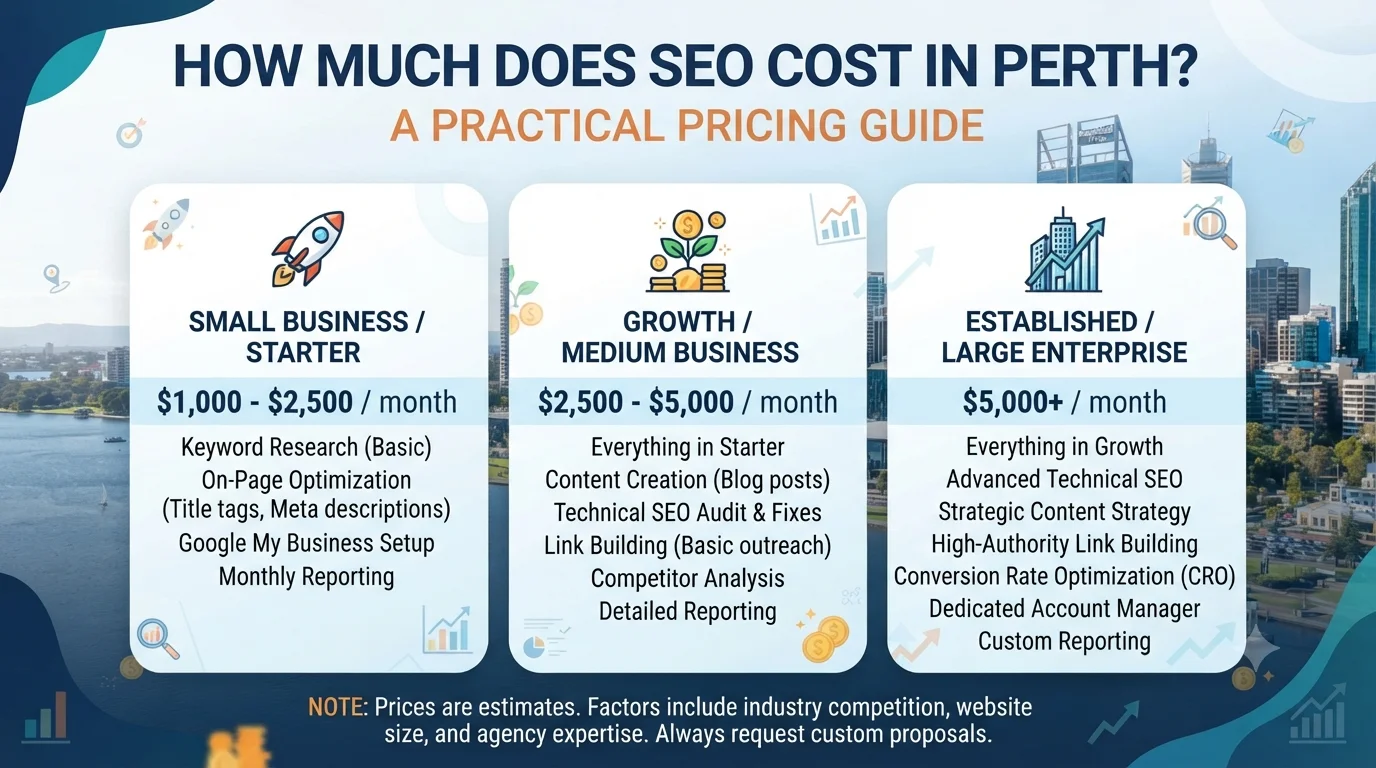
Australian providers publish a wide range of prices because account complexity, service scope and provider experience vary. As a broad planning reference, published pricing guides commonly place small-business management fees around A$800–A$2,000 per month, although simpler services may cost less and more complex campaigns may cost considerably more. These are indicative market figures, not an official industry rate or a quote for your business.
| Cost component | What it covers |
|---|---|
| Ad spend | Clicks and other advertising activity billed by Google |
| Setup fee | Initial research, campaign construction and configuration, where charged |
| Monthly management fee | Ongoing monitoring, optimisation and reporting |
| Additional services | Landing page development, advanced tracking, creative work or other agreed tasks |
For example, imagine your business pays A$1,500 per month in advertising spend and A$900 per month for management. Your total monthly investment is A$2,400, excluding any additional fees or applicable GST.
The management fee is not automatically wasted money, but it needs to deliver value. If the campaigns are already performing well and require little intervention, you should assess whether the scope of professional support is appropriate for your needs.
Why do management fees vary?
A straightforward Search campaign targeting one service and location may require less work than a national campaign with multiple services, complex tracking and several campaign types.
Other pricing factors include:
- The number and complexity of campaigns.
- The amount of research and optimisation required.
- Conversion tracking and analytics requirements.
- Landing page recommendations or development.
- Reporting and consultation.
- The provider’s experience and level of involvement.
Ask for a written breakdown of the work included. A lower fee may suit a simple account, while a more involved campaign may justify a larger investment if the additional work is necessary.
3. Seven Benefits of Hiring a Google Ads Manager
Professional management can provide value in several ways. The benefits depend on the quality of the work, the business’s starting point and the ability to act on the findings.
1. Less time spent managing campaigns
Small business owners often handle sales, customer service, staff, operations and administration themselves. Learning Google Ads while running the business can become difficult to sustain.
A manager can take responsibility for agreed campaign tasks, allowing you to concentrate on delivering your services and serving customers.
This does not remove your involvement entirely. You will still need to provide business information, approve important decisions and communicate which leads or sales are valuable.
2. Better control over irrelevant clicks
Not every click has commercial value.
For example, an electrician advertising installation services may receive searches from people looking for training courses, job vacancies or unrelated DIY advice. Depending on the campaign, these searches may use up budget without generating relevant enquiries.
A manager can review search term data, refine targeting and apply suitable negative keywords. These actions can reduce avoidable spend, although they cannot eliminate all irrelevant traffic.
3. More reliable conversion tracking
A campaign may appear successful if it generates plenty of clicks, but clicks alone do not show whether customers are contacting the business.
A professional can help check whether key actions are measured correctly. For a service business, that might include completed enquiry forms and relevant phone calls. For an online store, purchases and revenue may be more useful.
Reliable measurement provides a stronger basis for campaign decisions and budget allocation.
4. More informed budget decisions
An experienced manager can assess which services, keywords and campaigns are producing useful results and recommend where the available budget should be allocated.
For instance, a cleaning business may find that commercial cleaning enquiries are more valuable than general domestic cleaning enquiries. The business could then assess whether its campaign structure and budget reflect those priorities.
These decisions should be based on actual performance and business economics rather than assumptions about which campaign looks best.
5. Better alignment between ads and landing pages
An effective ad should lead to a page that matches the promise made in the advertisement.
If someone clicks an ad for emergency plumbing, sending them to a generic homepage may create unnecessary friction. A relevant page with clear service information and contact options may provide a better experience.
A Google Ads manager can identify these issues and recommend improvements. Development work may be charged separately, so confirm whether landing page changes are included in the service.
6. A clearer optimisation process
Campaign performance changes as search demand, competition, customer behaviour and business priorities evolve.
A manager can establish a routine for reviewing performance, testing changes and documenting decisions. This creates a more structured approach than making random adjustments whenever results fluctuate.
However, no professional can guarantee that every change will improve performance. Testing and evaluation remain essential.
7. More useful performance reporting
Good reporting explains what happened, why it may have happened and what should happen next.
Instead of receiving a report containing only clicks and impressions, you should understand how much was spent, which campaigns generated conversions, how much those conversions cost and whether the resulting leads were useful.
For a small business, this clarity can be as important as the campaign adjustments themselves.
4. When Should a Small Business Hire a Google Ads Manager?
Hiring professional help becomes more compelling when campaign problems are affecting your time, budget or ability to make informed decisions.
Your business is spending regularly but results are unclear
If you have been paying for Google Ads for several months but cannot explain which campaigns generate customers, an account review may be worthwhile.
The first step should be to check conversion tracking, campaign settings, search terms and landing pages. A manager should identify specific problems rather than immediately recommending a larger budget.
You are getting clicks but not enough enquiries
This is a common problem for service businesses.
Clicks without conversions can result from several factors: irrelevant search terms, weak ad messaging, a poor landing page, a complicated contact process or an offer that does not meet customer expectations.
Professional management may help diagnose the issue, but it is important to investigate the full customer journey. Not every conversion problem can be fixed through campaign settings alone.
Your services have different profit margins
Businesses offering several services may need to understand which enquiries are commercially valuable.
A landscaping company, for example, might offer small maintenance jobs and larger garden design projects. The campaigns that generate the most enquiries may not necessarily produce the best profit.
A manager can help assess campaign performance against the value of the work received, provided the business shares relevant sales and lead-quality information.
Your account has become more complicated
As a business expands into more services, locations or product categories, campaign management can become harder to handle internally.
Professional support may help maintain a consistent strategy and establish more reliable reporting. The level of help required will depend on the complexity of the account rather than the size of the business alone.
You lack the time to learn and manage Google Ads
There is a real opportunity cost to managing campaigns yourself.
If you spend hours learning the platform, checking search terms and investigating tracking issues, consider what else you could do with that time. Professional management may make sense when the value of your time and the improvement in decision-making justify the fee.
5. When Should You Manage Google Ads Yourself?
Hiring a manager is not always the best first step. Some small businesses can start with a simple campaign and manage it internally while they learn what works.
DIY management may be suitable if:
- Your campaign structure is straightforward.
- You have time to learn the platform and review performance.
- Your advertising budget is limited.
- You understand your customers and can write relevant ads.
- You can set up or verify conversion tracking.
- You are comfortable reviewing data before making changes.
Google provides its own learning resources and campaign guidance, so you do not necessarily need to hire an agency just to understand the basics.
Nevertheless, avoid making frequent changes without understanding their consequences. Automated bidding, conversion goals and campaign settings interact in ways that can make poorly planned adjustments counterproductive.
A sensible middle ground: pay for an audit
If you are unsure whether your campaigns need full-time management, consider a one-off account audit or consultation.
A clearly scoped audit may identify:
- Tracking problems.
- Irrelevant search terms.
- Budget allocation issues.
- Poor campaign structure.
- Ad and landing page mismatches.
- Opportunities for better reporting.
You can then decide whether to implement the recommendations yourself or pay for ongoing management. Check what the audit includes and whether implementation is a separate charge.
6. Google Ads Manager vs Freelancer vs Agency
The right option depends on the support your business needs and the resources available.
| Option | Best suited to | Potential drawbacks |
|---|---|---|
| DIY management | Simple campaigns and owners with time to learn | Requires ongoing learning and attention |
| Freelance Google Ads manager | Businesses needing focused, direct support | Availability and specialist coverage can vary |
| Google Ads agency | Businesses needing a broader team or multiple services | May cost more and involve several points of contact |
| In-house manager | Businesses with enough ongoing work to justify a dedicated role | Salary, employment costs, training and tools |
Hiring a freelancer
A freelancer may suit a small business that needs one experienced person to manage a limited number of campaigns. Direct communication can make it easier to discuss business priorities and performance.
Before hiring, ask who will actually work on your account, how often it will be reviewed and what happens if the freelancer becomes unavailable.
Hiring an agency
An agency may offer access to several capabilities, such as campaign management, analytics, creative support and landing page expertise. This can be useful when your requirements extend beyond one person’s skill set.
However, the agency’s size does not automatically indicate better performance. Find out who will manage the account day to day and what work the fee covers.
Hiring an in-house employee
An in-house manager may be appropriate when advertising is a major, ongoing part of the business and there is enough work to justify a dedicated role.
For a smaller company running a limited campaign, a freelancer or external specialist may be a more practical arrangement.
7. How to Calculate Whether Hiring a Google Ads Manager Is Worth It
Rather than judging a manager by the number of clicks generated, compare the total investment with the gross profit or other business value generated by the campaign.
Consider this illustrative example for an Australian service business.
| Monthly item | Example amount |
|---|---|
| Google Ads spend | A$1,500 |
| Management fee | A$900 |
| Total marketing investment | A$2,400 |
| New customers attributed to the campaign | 8 |
| Average gross profit per new customer | A$500 |
| Total gross profit from those customers | A$4,000 |
| Gross profit remaining after marketing costs | A$1,600 |
In this example, A$4,000 in gross profit minus A$2,400 in marketing costs leaves A$1,600 before other business overheads, taxes and any additional acquisition costs.
These figures are hypothetical, not a prediction of what your business will achieve. The result also depends on accurate attribution, the quality of the customers and whether the gross profit estimate includes the relevant costs of delivering the work.
Calculate your break-even point
A useful starting point is to estimate how many additional customers you need to cover the total advertising and management costs.
Using the same example:
- Total monthly marketing cost: A$2,400.
- Gross profit per new customer: A$500.
- Break-even requirement: A$2,400 ÷ A$500 = 4.8 customers.
The business would need approximately five customers at that gross profit level to cover the A$2,400 marketing investment, before other overheads and taxes.
This calculation helps establish a target, but it does not guarantee that Google Ads will produce the required number of customers.
Consider lead quality and sales conversion
For businesses that generate enquiries rather than direct online sales, track what happens after a lead arrives.
If a campaign produces 20 enquiries but only two become paying customers, the cost per lead alone may hide a serious problem. Conversely, fewer enquiries may be valuable if they turn into higher-value projects.
Work with your manager to track qualified leads, booked appointments, sales and gross profit where possible. These measures provide a more useful picture of campaign performance than clicks alone.
8. How to Choose the Right Google Ads Manager
The right provider should understand your business goals, explain their process clearly and give you visibility into how your budget is being used.
Ask how they measure success
Find out whether they focus only on clicks and impressions or also monitor conversions, qualified leads and sales where tracking permits.
A good provider should explain which metrics are suitable for your business and acknowledge any limitations in the available data.
Confirm what is included in the fee
Ask whether the monthly fee covers keyword research, ad copy, search term reviews, negative keywords, bidding adjustments, conversion tracking, reporting and meetings.
Also clarify whether landing page development, analytics implementation and other technical work are included or billed separately.
Keep access to your own account
Your business should retain appropriate access to its Google Ads account and understand how the account is configured.
Ask the provider to explain account access, billing, data ownership and the process for ending the arrangement. Avoid unnecessary dependence on a third party to access your own advertising history and performance data.
Ask for a realistic plan
A manager should be able to describe the initial audit, setup requirements, early priorities and reporting schedule.
Be cautious of guaranteed first-page results, guaranteed lead volumes or promises of a specific return without understanding your business, market and conversion data.
Check communication and reporting
Agree on how often you will receive reports, who you can contact and how urgent issues will be handled.
Reports should explain the results and the decisions made, not simply provide screenshots from the advertising platform.
Start with clear expectations
Before signing, document the scope of work, fees, contract length, cancellation terms, access arrangements and success measures.
This makes it easier to evaluate the relationship based on agreed responsibilities rather than vague expectations.
9. Common Mistakes Small Businesses Should Avoid
Choosing the cheapest manager automatically
A lower fee can be suitable for a straightforward account, but price alone does not reveal how much work will be performed.
Compare deliverables, communication, tracking expertise and the proposed strategy. A cheap service that provides little useful oversight may not meet your needs.
Increasing the advertising budget before fixing the basics
More spend does not automatically solve irrelevant clicks, poor conversion tracking or a weak landing page.
Identify the problem first. Increasing the budget may simply increase costs if the underlying campaign is not reaching the right people.
Expecting immediate results
New campaigns need time to collect useful data, and performance can vary. The appropriate evaluation period depends on the campaign, the amount of traffic and the business’s sales cycle.
Ask your manager to explain the early indicators they will monitor and when broader performance can reasonably be assessed.
Focusing only on cost per click
A low CPC can look attractive, but it does not necessarily mean the campaign is profitable.
Evaluate cost per qualified lead, conversion rate, customer acquisition cost and gross profit where the data is available. A more expensive click may still be commercially useful if it attracts a customer who is more likely to buy.
Failing to communicate lead quality
Your manager may see that a form was submitted, but they may not know whether the enquiry was relevant, whether the customer answered the phone or whether a sale followed.
Share feedback on lead quality and sales outcomes. This information helps connect advertising activity with real business results.
Leaving the account unchecked
Hiring a manager does not mean you should ignore the campaigns completely. Review reports, ask questions and make sure the activity aligns with your commercial goals.
Professional management should improve visibility and decision-making, not remove accountability.
Frequently Asked Questions
Is hiring a Google Ads manager worth it for a small business?
It can be worthwhile when professional management saves time, addresses campaign problems or improves the quality of business decisions enough to justify the fee. The value depends on your budget, campaign complexity, tracking and commercial results. It is not guaranteed to make every campaign profitable.
How much does a Google Ads manager cost in Australia?
Published Australian pricing varies by provider and scope. A broad planning reference for small-business management is around A$800–A$2,000 per month, although simpler services may cost less and complex accounts may cost more. Advertising spend paid to Google is normally separate, so request a clear breakdown of all costs.
Can I run Google Ads without hiring an agency?
Yes. You can manage campaigns yourself if you have the time to learn, monitor performance and understand the settings. Start with a clear objective, appropriate targeting and reliable conversion tracking. Consider an audit or consultation if you need expert advice without committing to ongoing management.
What should a Google Ads manager do every month?
The work depends on the account, but may include reviewing search terms, updating negative keywords, assessing ad performance, checking conversion tracking, adjusting budgets and bidding, testing messaging and reporting results. Ask for a specific list of deliverables rather than assuming every provider includes the same services.
How long does it take for Google Ads to work?
Ads may begin receiving impressions and clicks soon after campaigns become eligible to serve, but that does not mean profitable results will appear immediately. The time needed to assess performance depends on traffic, conversion volume, competition and the length of your sales cycle. Your manager should set realistic evaluation milestones.
Should I hire a freelancer or a Google Ads agency?
A freelancer may suit a smaller account requiring focused, direct support. An agency may be more appropriate when you need multiple specialists, broader marketing services or support across several complex campaigns. Evaluate the person doing the work, the service scope and the reporting process rather than choosing by business size alone.
What is the difference between Google Ads management fees and ad spend?
Ad spend is paid to Google for advertising activity. The management fee pays the consultant or agency for its work, such as strategy, campaign optimisation and reporting. Check your proposal to confirm whether setup fees, GST and additional services are charged separately.
How do I know if my Google Ads manager is doing a good job?
Look for transparent reporting, documented work, accurate tracking and explanations of campaign decisions. Performance should be assessed against suitable objectives, such as qualified leads, sales or customer acquisition costs, rather than clicks alone. Results will vary, so a manager should be able to explain both progress and underperformance.
Final Verdict: Is a Google Ads Manager Worth the Investment?
Hiring a Google Ads manager can be a sensible investment for a small business when campaigns require ongoing attention, advertising spend is being wasted or the business needs better insight into what generates customers.
However, professional management is not essential for every advertiser. If your campaigns are simple, your budget is limited and you have the time to learn, managing them yourself may be a reasonable starting point. A one-off audit can also help you identify problems before committing to ongoing support.
Before making a decision, compare the management fee with the value of your time, the quality of your leads, the reliability of your tracking and the gross profit your advertising can realistically generate. Choose a provider who explains the work clearly, keeps you informed and measures performance against your business goals.
If you are looking for professional support, explore Scalvia’s Google Ads management services to discuss how a structured campaign strategy could support your business.