

Most website owners open Google Search Console, glance at clicks and impressions, then leave. That’s a missed opportunity. Hidden inside GSC are keyword opportunities that can generate thousands of additional visitors without buying expensive SEO tools or chasing highly competitive keywords.
If you’ve ever wondered why some websites consistently grow organic traffic while others stay flat, the answer often isn’t publishing more content. It’s finding the keywords Google already trusts your website for and optimizing them intelligently.
Why Google Search Console Is a Goldmine for Keyword Research
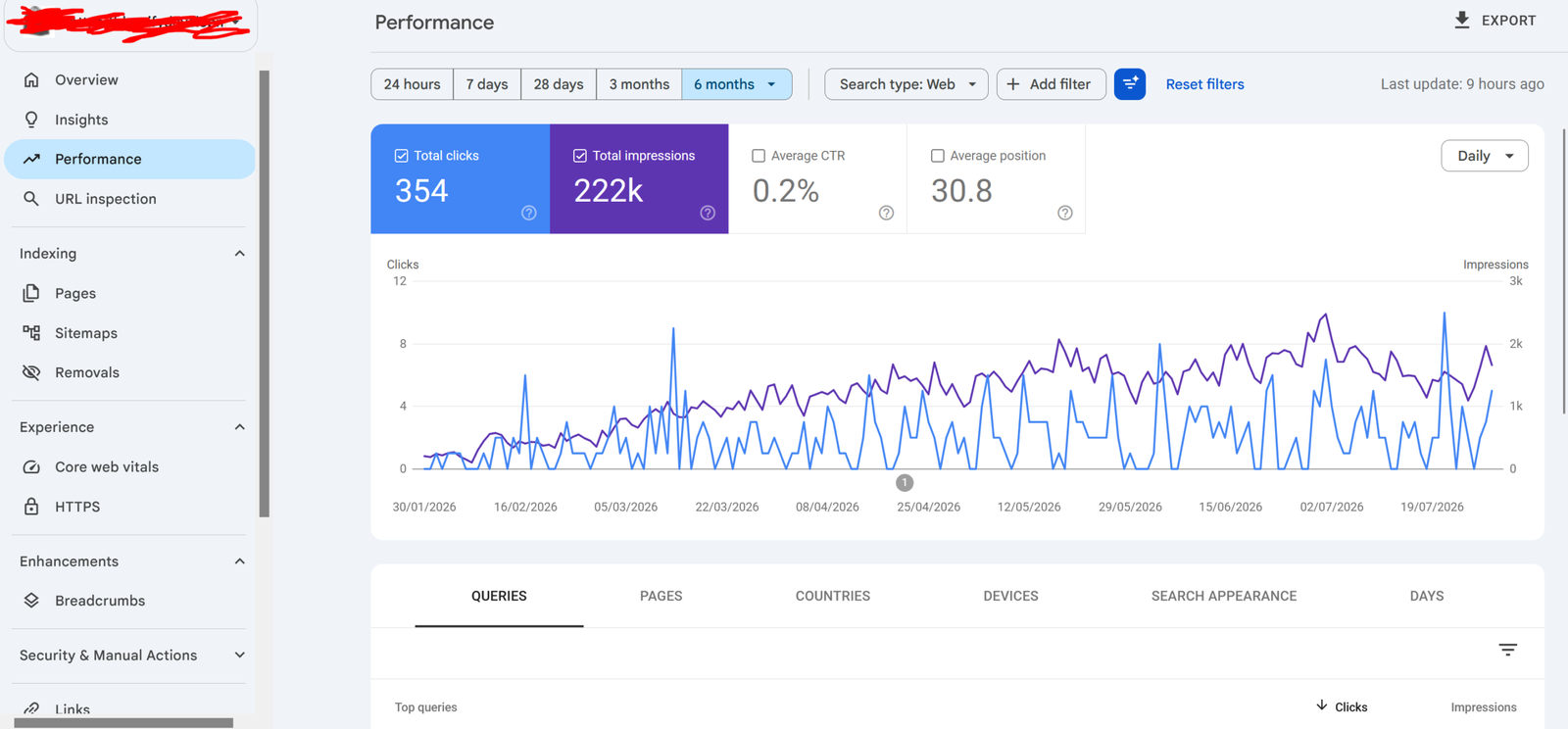
Google Search Console provides data directly from Google. Unlike third-party SEO tools that estimate rankings and search volume, GSC shows actual search queries that triggered your pages.
This makes it one of the most reliable sources for discovering:
- Low-hanging ranking opportunities
- Hidden long-tail keywords
- Pages losing visibility
- High-impression keywords with poor CTR
- Queries Google already associates with your content
Many SEOs only focus on keywords ranking in the top three positions. In reality, the biggest traffic gains often come from pages sitting between positions 8 and 20.
Hidden Google Search Console Keyword Opportunities You Should Look For
Keywords Ranking Between Positions 8–20
These are probably the easiest SEO wins.
If a keyword already ranks on the first or second page, Google clearly understands your page is relevant. Small improvements—better content, stronger internal links, updated information, or improved page experience—can move it into the top five results.
For example:
- Position: 11
- Monthly Impressions: 12,000
- CTR: 0.8%
Improving that page to position 4 could multiply your traffic several times without creating new content.
High Impressions But Low Click-Through Rate
This is another opportunity many marketers overlook.
Imagine a keyword receives:
- 30,000 impressions
- Average position: 4.5
- CTR: 1.4%
The ranking isn’t bad. The problem is users aren’t clicking.
Usually, the issue comes from:
- Weak page titles
- Generic meta descriptions
- Missing numbers or dates
- Search intent mismatch
Refreshing your title tag and meta description can significantly improve CTR while keeping the same ranking.
Long-Tail Keywords Google Already Associates With Your Page
Open any page inside Search Console and review every query bringing impressions.
You’ll often discover dozens of related searches you never intentionally targeted.
For example, an article about SEO audits might also rank for:
- website SEO health check
- technical SEO checklist
- free SEO audit guide
- how to improve website SEO
These keywords can naturally be added as headings, FAQs, or supporting sections, making the content more comprehensive while increasing topical relevance.
How to Turn Hidden Keywords Into Higher Rankings
Finding keywords is only the first step. The real value comes from optimization.
Refresh Existing Content
Instead of publishing another article, improve what’s already ranking.
Update:
- Statistics
- Examples
- Internal links
- FAQs
- Images
- Missing sections
Google generally prefers well-maintained content over outdated pages.
Strengthen Internal Linking
Suppose five blog posts discuss SEO audits.
Link all of them naturally to your primary guide using descriptive anchor text rather than generic phrases like “click here.”
Internal links help Google understand page relationships and distribute authority across your website.
Match Search Intent Better
Sometimes rankings stall because the page doesn’t fully answer what searchers expect.
Ask yourself:
- Does this page solve the searcher’s problem?
- Are important questions answered?
- Is the content easy to skim?
- Would someone bookmark or share it?
Improving usefulness often has a bigger impact than adding more keywords.
Use Search Console Filters Most SEOs Never Touch
The Performance report becomes much more valuable when you apply filters.
Some useful combinations include:
Filter by Page
Instead of viewing all website keywords, analyze one page at a time.
This quickly reveals hidden keyword variations that deserve additional optimization.
Compare Date Ranges
Compare the last 28 days with the previous 28 days.
A gradual decline often indicates:
- Fresh competitors
- Outdated content
- Reduced click-through rate
- Search intent changes
Catching these trends early makes recovery much easier.
Filter by Device
Sometimes a keyword performs well on desktop but poorly on mobile.
This could indicate:
- Slow loading pages
- Poor mobile formatting
- Unfriendly layouts
- Large images affecting Core Web Vitals
Improving the mobile experience can increase both rankings and conversions.
Frequently Asked Questions
How do I find hidden keywords in Google Search Console?
Open the Performance report, filter by an individual page, and review all search queries generating impressions. Many of these long-tail keywords aren’t intentionally targeted but can be incorporated into your content.
Which keyword positions should I optimize first?
Focus on keywords ranking between positions 8 and 20. These often require relatively small improvements to reach page one and can produce noticeable traffic growth.
Can Google Search Console replace paid keyword tools?
For optimizing existing content, yes. GSC provides real Google search data for your website. Paid tools remain useful for competitor research and discovering entirely new keyword opportunities.
How often should I review Search Console keywords?
Checking every two to four weeks is a practical schedule. Regular reviews help you identify new keyword opportunities, declining pages, and changes in click-through rate before they become larger SEO problems.
Conclusion
The best keyword opportunities are often the ones you already have. Google Search Console tells you exactly where your website has earned visibility, making it one of the most valuable free SEO tools available. Instead of publishing more content every week, spend time improving pages that are already close to ranking higher. In many cases, those hidden opportunities deliver faster and more sustainable organic growth than starting from scratch.