



Introduction
Search engines play an important role in how customers discover businesses, compare services and decide who to contact. Whether you run a plumbing company in Perth, an accounting firm in Melbourne, an online store in Sydney or a professional service business in Brisbane, appearing in relevant Google searches can help potential customers find your business when they need what you offer.
However, getting your website to appear prominently in search results involves more than adding keywords to a few pages. Effective search engine optimisation (SEO) combines technical website improvements, useful content, keyword research, local visibility, website structure and ongoing performance analysis.
For Australian businesses, the right strategy should also reflect the locations you serve, the way your customers search, your competitors and the commercial outcomes you want to achieve. A business that relies on local enquiries needs a different approach from an ecommerce store selling products nationwide.
This guide explains how SEO works , which activities matter most, how to build a practical strategy and how to measure progress. You’ll also learn how small businesses can improve their Google visibility without wasting time on tactics that offer little value.
Quick Answer: How Can Australian Businesses Grow With Google?
Australian businesses can improve their visibility on Google by creating helpful content, targeting relevant search terms, maintaining a technically accessible website, strengthening local search signals where appropriate and measuring meaningful results.
A practical SEO strategy should include:
- Keyword research: Understand what potential customers search for before choosing a product or service.
- Technical SEO: Help search engines discover, crawl and understand important pages.
- On-page SEO: Improve page titles, headings, content, internal links and other relevant elements.
- Local SEO: Help nearby customers discover your business through local search results and Google Maps.
- Content marketing: Answer customer questions and demonstrate relevant knowledge.
- Authority building: Earn relevant mentions and links through useful resources and legitimate relationships.
- Conversion optimisation: Make it straightforward for visitors to enquire, book, purchase or contact your business.
- Performance measurement: Use tools such as Google Search Console and analytics platforms to understand what is working.
SEO is an ongoing process rather than a one-off website change. Google explains that changes can take different amounts of time to appear in search results, and following SEO best practices does not guarantee that a page will rank or even be indexed. Google’s SEO Starter Guide provides the official foundation for getting started.
1. What Is SEO, and Why Does It Matter for Australian Businesses?
Search engine optimisation is the process of improving a website’s ability to appear in relevant organic search results. Organic results are the unpaid listings displayed in response to a search query.
Unlike paid advertising, where businesses pay for advertising placements according to their campaign settings, SEO focuses on improving a website’s relevance, accessibility and usefulness for searchers.
For example, someone looking for a local electrician might search for “electrician in Perth”, while an online shopper may search for “ergonomic office chair Australia”. A well-planned SEO strategy helps a business create pages that address the needs behind those searches.
Benefits of SEO for businesses
Greater search visibility
SEO can help your website appear for relevant searches that your potential customers make. Better visibility can introduce your business to people who might not have discovered it through referrals or social media alone.
More relevant website traffic
The goal is not simply to attract more visitors. A strong strategy focuses on people whose needs match your services, products or expertise.
Support for local enquiries
Local SEO can help service-area businesses, shops and professional practices become easier to find when customers search for relevant services in a particular location.
Long-term marketing value
Useful content and well-optimised pages can continue attracting visitors after publication. Nevertheless, rankings and traffic can fluctuate, and ongoing maintenance is often necessary.
A better customer experience
Many SEO improvements also make a website easier to navigate. Clear service descriptions, sensible page structures, helpful answers and straightforward contact options benefit visitors as well as search engines.
SEO is not just about rankings
A first-page position may look impressive, but its value depends on the search term and the business outcome it supports.
For example, a Perth cleaning company might attract thousands of visitors through a general cleaning advice article without generating many bookings. A smaller amount of traffic from people searching for commercial cleaning services in its service area may be more commercially useful.
Therefore, connect your SEO objectives to real business goals, such as qualified enquiries, sales, bookings or relevant product discovery.
2. How Does Google Search Work?
Understanding the basic process helps explain why SEO requires several different activities.
Crawling
Google uses automated systems, known as crawlers, to discover pages across the web. Internal links, external links and submitted sitemaps can help Google discover website content.
If important pages are inaccessible or poorly connected to the rest of the website, discovery may become more difficult.
Indexing
After discovering a page, Google processes its content and may add it to its index. Indexing is not guaranteed, even when a page is accessible.
Duplicate content, technical configuration, content quality and other factors can influence whether a page is indexed and how it is understood.
Ranking and serving search results
When someone searches, Google’s systems evaluate available pages and select results that may be useful for the query. Relevance, meaning and other signals influence what appears.
The results can vary depending on the search itself, the available content and the search environment. Businesses cannot guarantee a particular position simply by following a checklist.
What does this mean for your business?
Your website needs to make its purpose clear, provide useful information and allow search engines to access important pages.
At the same time, content must serve real customers. Google’s guidance recommends creating helpful, reliable, people-first content instead of producing pages primarily to manipulate search rankings. Read the Google guide to creating helpful content for more detail.
3. The Main Types of SEO Your Business Needs
SEO is a collection of connected activities. The balance between them depends on your industry, website and commercial goals.
| SEO area | What it involves | Why it matters |
|---|---|---|
| Keyword research | Identifying relevant searches and understanding intent | Helps prioritise topics and pages |
| On-page SEO | Improving page titles, headings, content and internal links | Makes pages clearer and more relevant |
| Technical SEO | Reviewing crawling, indexing, site structure and performance | Helps search engines access and process important pages |
| Local SEO | Improving local business information and location relevance | Supports discovery by nearby customers |
| Content SEO | Publishing and improving useful articles, service pages and guides | Answers questions and supports customer decisions |
| Off-page SEO | Earning relevant links, mentions and recognition | Can strengthen discovery and contribute to a site’s reputation |
| Conversion optimisation | Improving forms, calls to action and the enquiry experience | Helps turn relevant visitors into customers |
A common mistake is treating these areas as separate projects with no connection. In practice, they should support the same business objectives.
For instance, publishing an article about a service is more useful when the website has a relevant service page, logical internal links and a clear way for readers to make an enquiry.
4. How to Build an Effective SEO Strategy
Before investing in SEO services, establish what you want to achieve and how your website currently performs.
Step 1: Define your business goals
Start by identifying the outcomes that matter most.
A local tradie may want more quote requests from specific suburbs. A professional services firm may want enquiries for high-value services. An ecommerce business may focus on non-branded organic traffic, product discovery and online sales.
These goals should guide keyword selection, content priorities and reporting.
Avoid setting vague objectives such as “get more traffic” without defining what useful traffic means for your business.
Step 2: Research keywords and search intent
Keyword research identifies the terms people use when looking for information, products and services.
For Australian businesses, useful search terms may include:
- Service and location searches, such as “plumber in Perth”.
- Product searches, such as “standing desk Australia”.
- Problem-based searches, such as “why is my air conditioner leaking”.
- Comparison searches, such as “SEO vs Google Ads”.
- Commercial searches, such as “SEO agency Perth”.
- Informational searches, such as “how much does a website cost”.
The intent behind each query matters. Someone researching a problem may need an educational article, while someone comparing providers may need a detailed service page or comparison guide.
Use tools such as Google Search Console, Google Keyword Planner and reputable keyword research platforms to investigate search demand and opportunities. Treat keyword volume estimates as estimates rather than exact forecasts of traffic.
Step 3: Audit your existing website
Before creating dozens of new pages, identify what is already working and what needs improvement.
Review:
- Which pages attract organic impressions and clicks.
- Whether important pages can be crawled and indexed.
- Whether titles and headings accurately describe page content.
- Whether multiple pages target the same intent unnecessarily.
- Whether service pages explain the offer clearly.
- Whether visitors can navigate the site easily.
- Whether forms, phone links and purchase journeys work correctly.
Existing pages may offer valuable opportunities. Improving a relevant page that already appears in search results can be more appropriate than creating another page targeting the same query.
Step 4: Map keywords to the right pages
Each important page should have a clear purpose.
For example, an SEO agency may have separate pages for its core SEO service, local SEO, ecommerce SEO and SEO audits. Supporting blog articles can answer related questions and link to the relevant service pages.
This structure helps visitors understand the relationship between your content and services. It also reduces the risk of publishing several pages that compete for the same search intent.
Step 5: Prioritise work by impact and effort
Not every SEO task deserves equal attention.
A page blocked from indexing may need immediate attention. A service page that attracts relevant impressions but few clicks might need a better title or stronger content. A minor formatting issue may be less urgent.
Create a prioritised plan with clear owners, deadlines and success measures. This keeps the campaign focused on work that supports business goals rather than an endless list of minor changes.
Step 6: Review and refine regularly
Search demand, competitors, products and customer needs change over time.
Review your performance data at regular intervals, update outdated content when necessary and adjust priorities based on evidence. A useful SEO strategy should evolve as you learn which pages attract the right visitors and which searches lead to meaningful business outcomes.
5. Local SEO for Australian Businesses
Local SEO helps businesses become more visible for searches connected to a geographic area. It can be especially valuable for tradies, clinics, restaurants, retail shops, professional practices and other businesses serving defined locations.
For example, someone searching for an accountant in Perth may be looking for a nearby firm they can contact. A business that communicates its services, location and expertise clearly gives that person more useful information to evaluate.
Optimise your Google Business Profile
If your business is eligible for a Google Business Profile, keep its details accurate and complete.
Review the following:
- Business name and appropriate category.
- Address or service-area information, according to your business model.
- Phone number and website.
- Opening hours and special hours.
- Services and relevant business information.
- Current photos that represent the business accurately.
- Customer reviews and appropriate responses.
Do not add misleading locations or create profiles for places where the business does not genuinely operate. Accurate information helps customers understand where and how you provide your services.
Create useful location and service pages
A business serving several suburbs may need pages that explain its relevant services and coverage.
However, avoid producing dozens of near-identical suburb pages where only the location name changes. Each page should offer genuine value, accurately reflect the business’s service area and answer the needs of customers in that location.
For a Perth electrician, a useful page might explain the electrical services offered, the types of properties served, the actual service area and how to request a quote.
Build a consistent local presence
Review the accuracy of your business information across important directories and industry platforms. Relevant local associations, suppliers and community organisations may also offer legitimate opportunities to build relationships and earn mentions.
Consistency is helpful, but businesses should not pursue every directory simply to create listings. Focus on relevant platforms and accurate information.
Encourage genuine customer reviews
Reviews can help potential customers assess a business before contacting it. Ask customers to share honest feedback through permitted channels and respond professionally to positive and negative comments.
Do not buy fake reviews, offer prohibited incentives or pressure customers to leave only positive feedback. Reviews should reflect genuine customer experiences and comply with the relevant platform’s policies.
Measure local SEO performance
Useful indicators include local search visibility, relevant website visits, calls, direction requests and enquiries. Interpret these measures in context because not every interaction leads to a sale, and tracking availability varies by platform.
For businesses targeting Perth, Scalvia’s SEO services in Perth provide a relevant starting point for exploring a location-focused SEO approach.
6. SEO Content That Attracts the Right Customers
Content helps search engines understand what your website offers while giving customers the information they need to make decisions.
Publishing more articles is not automatically better. The aim is to build a useful collection of pages that addresses the questions and requirements of your intended audience.
Create content around the customer journey
Customers often search differently depending on how close they are to making a decision.
| Customer stage | Example search | Suitable content |
|---|---|---|
| Awareness | “Why does my website get no enquiries?” | Educational guide or troubleshooting article |
| Research | “How does local SEO work?” | Detailed explainer |
| Comparison | “SEO agency vs SEO consultant” | Comparison article |
| Decision | “SEO services Perth” | Service page with clear deliverables |
| After purchase | “How to check Google Search Console performance” | Practical support guide |
This approach allows your website to answer questions at different stages without making every page a sales pitch.
Write for people first
A useful page should answer the reader’s question clearly, provide accurate information and explain what to do next.
For example, a page about SEO pricing should explain the factors that affect costs, what services may be included and which questions to ask before hiring a provider. It should not simply repeat the phrase “SEO pricing” throughout the article.
Google does not prescribe a universal word count that guarantees rankings. Focus on covering the topic sufficiently and remove unnecessary repetition.
Demonstrate relevant experience and expertise
Businesses should explain their services honestly and provide evidence that helps customers assess their credibility.
Depending on the industry, this might include qualified staff information, detailed service explanations, original photography, clear policies, accurate product specifications or properly documented case studies.
Never invent customer results, awards, certifications or personal experience. If you publish case studies, ensure the results and circumstances can be substantiated.
Use internal links strategically
Internal links connect related pages and help visitors explore the website.
A blog about local SEO could link to a local SEO service page. An article about ecommerce search optimisation might link to a relevant ecommerce service page or a technical SEO guide.
Use descriptive anchor text that explains what the destination page covers. Avoid forcing links into sentences where they do not make sense.
Keep important content current
Review articles and service pages when facts, products, processes or customer needs change. Update content when there is a meaningful reason to do so, rather than changing publication dates without substantive improvements.
A content review should ask whether the information remains accurate, useful and relevant to the people who visit the page.
7. Technical SEO Essentials
Technical SEO helps ensure that your website is accessible, understandable and properly configured for search engines.
You do not need to become a developer to understand the main areas that should be reviewed.
Crawling and indexing
Check whether important pages are accessible to search engines and eligible for indexing. Review robots directives, noindex settings, canonical tags, redirects and XML sitemaps where relevant.
Google Search Console can help identify indexing issues, although individual reports need to be interpreted carefully. A page not appearing in search results is not always caused by a technical error.
Mobile usability and page experience
Your website should work properly on mobile devices as well as desktop computers.
Make sure text is readable, navigation is usable, buttons can be tapped and important information is easy to find. Review page performance and avoid disruptive elements that prevent visitors from accessing the content.
Good usability supports customers even when a specific design change does not directly improve rankings.
Website structure and URLs
Organise pages logically so visitors can understand how services, products and supporting content relate to one another.
Descriptive URLs can help people understand a page’s purpose. Use a consistent structure and avoid changing established URLs unnecessarily, particularly when doing so could break links or remove useful pages.
Duplicate and overlapping content
Similar pages can create confusion for visitors and complicate how search engines interpret a website’s content.
Review pages that target almost identical topics or serve the same purpose. Depending on the circumstances, the right action may be to improve their distinct value, consolidate overlapping material or use an appropriate canonical configuration.
Do not remove pages automatically just because they share some wording. Assess their usefulness, search intent and performance first.
Structured data
Structured data provides search engines with information about the content of a page. Depending on the page and the supported format, it may help a page qualify for certain search enhancements.
Use the relevant schema types accurately, such as Article, Product, LocalBusiness or BreadcrumbList when appropriate. The correct choice depends on the actual page and business.
Valid structured data does not guarantee a rich result or higher ranking. Never use markup to describe information that is not present or accurate.
8. How to Measure SEO Performance
An SEO campaign should be measured against clear objectives rather than rankings alone.
Google Search Console
Search Console helps you review impressions, clicks, click-through rates and average positions for Google Search performance. It can also provide information about indexing and certain technical issues.
Use the data to identify relevant search queries, pages gaining visibility and opportunities to improve content.
Google Analytics
An analytics platform can help you understand what happens after visitors arrive at your website.
Depending on your setup, you can review organic landing pages, engagement, form submissions, purchases and other important events. Ensure that tracking is configured correctly and that data is interpreted within its limitations.
Business outcomes
For service businesses, meaningful outcomes may include qualified enquiries, phone calls, bookings or quote requests. Ecommerce businesses may focus on transactions, revenue and product performance.
Track outcomes consistently and, where possible, distinguish organic search activity from other marketing channels.
A practical SEO reporting framework
| Metric | What it helps you understand |
|---|---|
| Search impressions | Whether pages are appearing for relevant searches |
| Organic clicks | How much traffic Google Search sends to your site |
| Priority keyword visibility | Whether target terms are gaining or losing visibility |
| Qualified organic traffic | Whether visitors match your intended audience |
| Enquiries or sales | Whether SEO contributes to business outcomes |
| Work completed | Whether agreed technical and content tasks have been implemented |
Avoid judging a campaign from a single week’s movement. Search performance can fluctuate, and the right review period depends on the amount of data available and the nature of the business.
9. Common SEO Mistakes to Avoid
Some approaches waste resources, while others can harm a website’s search performance or reputation.
Keyword stuffing
Repeating the same keyword unnaturally makes content difficult to read and can violate Google’s spam policies.
Use relevant phrases where they fit naturally, and prioritise clear answers over repetition.
Publishing low-value content at scale
Producing large quantities of articles without sufficient research, originality or usefulness can create a website full of pages that do little for readers.
A smaller collection of well-planned, genuinely helpful pages can be more valuable than a large volume of repetitive content.
Buying manipulative links
Avoid link schemes intended to manipulate rankings. Focus instead on earning relevant editorial links and building genuine relationships that benefit your audience.
Ignoring technical problems
Publishing new content will not solve every issue. If important pages cannot be crawled or indexed, address those problems as part of the broader strategy.
Expecting instant results
SEO changes do not all produce immediate results. Set realistic milestones, monitor progress and investigate underperformance rather than relying on promises of fixed ranking deadlines.
Measuring traffic without business value
More visits do not automatically mean more customers. Review the relevance of the searches and the actions visitors take after arriving on the site.
Neglecting the website after launch
Services change, information becomes outdated and technical problems can develop. Regular reviews help maintain the usefulness and accessibility of important pages.
10. How Long Does SEO Take to Work?
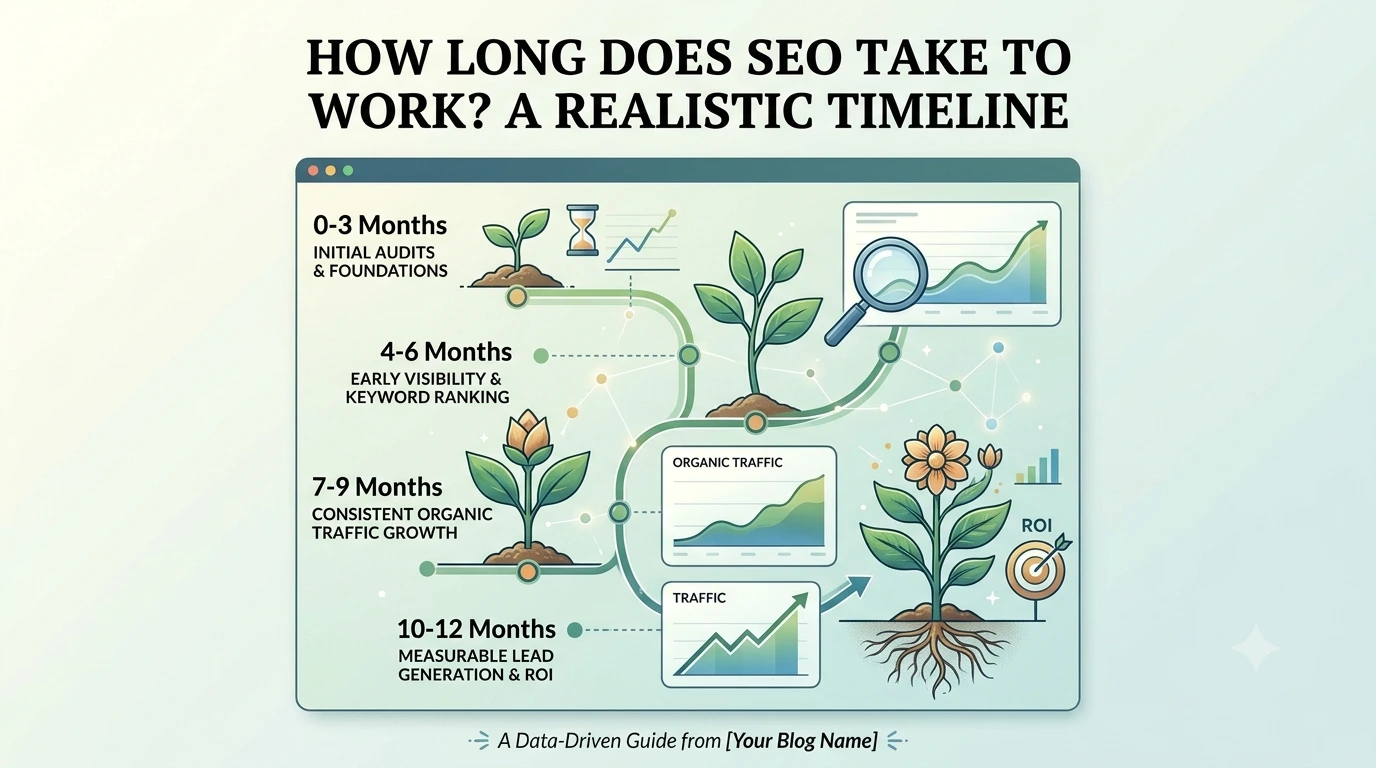
There is no universal timeline for SEO results. Google explains that some changes may be reflected in a few hours, while others can take several months. The time required depends on the website, the changes made and the competitive environment.
For planning purposes, businesses can use these broad stages:
- First month: Audit the website, research keywords, establish baseline metrics and prioritise important issues.
- Months two to three: Implement technical fixes, improve service pages and publish useful content.
- Months three to six: Review early visibility changes and refine the strategy based on performance data.
- Six months and beyond: Continue improving successful pages, filling relevant content gaps and measuring commercial outcomes.
These are indicative stages, not guaranteed milestones. A new website competing in a crowded market may need more time than an established website with useful content and an existing search presence.
The important thing is to assess both the work completed and the evidence of progress. If results remain limited, investigate whether the strategy, implementation or keyword targets need to change.
11. Should You Manage SEO Yourself or Hire an SEO Specialist?
Some businesses can handle basic SEO tasks internally, particularly when they have a small website, time to learn and access to the right tools.
Managing SEO yourself may involve improving page titles, writing useful service content, setting up Search Console and maintaining accurate business information. More complex work can require technical knowledge, structured research and ongoing analysis.
An SEO specialist or agency may be useful when your website has technical issues, competition is strong, you need a larger content strategy or internal resources are limited.
Before hiring a provider, ask:
- What will you review before recommending a strategy?
- Which pages and keywords will receive priority?
- What work will be completed each month?
- How will you measure qualified traffic and enquiries?
- What reporting will I receive?
- Who will implement technical recommendations?
- How will you handle changes if results are limited?
- What are the contract terms and total costs?
Be cautious of guaranteed rankings, unclear deliverables and claims that cannot be substantiated.
For businesses seeking professional support in Perth, Scalvia’s SEO services outline an approach focused on keyword research, website optimisation, technical SEO, content and long-term search visibility.
Frequently Asked Questions
What is SEO for Australian businesses?
SEO is the process of improving a website’s visibility in unpaid search results for relevant searches. For Australian businesses, this may involve local search optimisation, technical improvements, useful content, keyword research and ongoing performance measurement.
How can a small business rank higher on Google in Australia?
Start by ensuring that important pages can be accessed and indexed, then improve the content and structure of your website around relevant customer searches. If you serve a local area, maintain accurate Google Business Profile information and create useful service pages. Monitor results and refine your approach over time.
Is SEO worth it for small businesses?
SEO can be worthwhile when customers use search engines to find the products or services you provide. Its value depends on demand, competition, investment, implementation quality and how well organic visitors convert into customers. Compare the likely benefits with the resources required and track actual business outcomes.
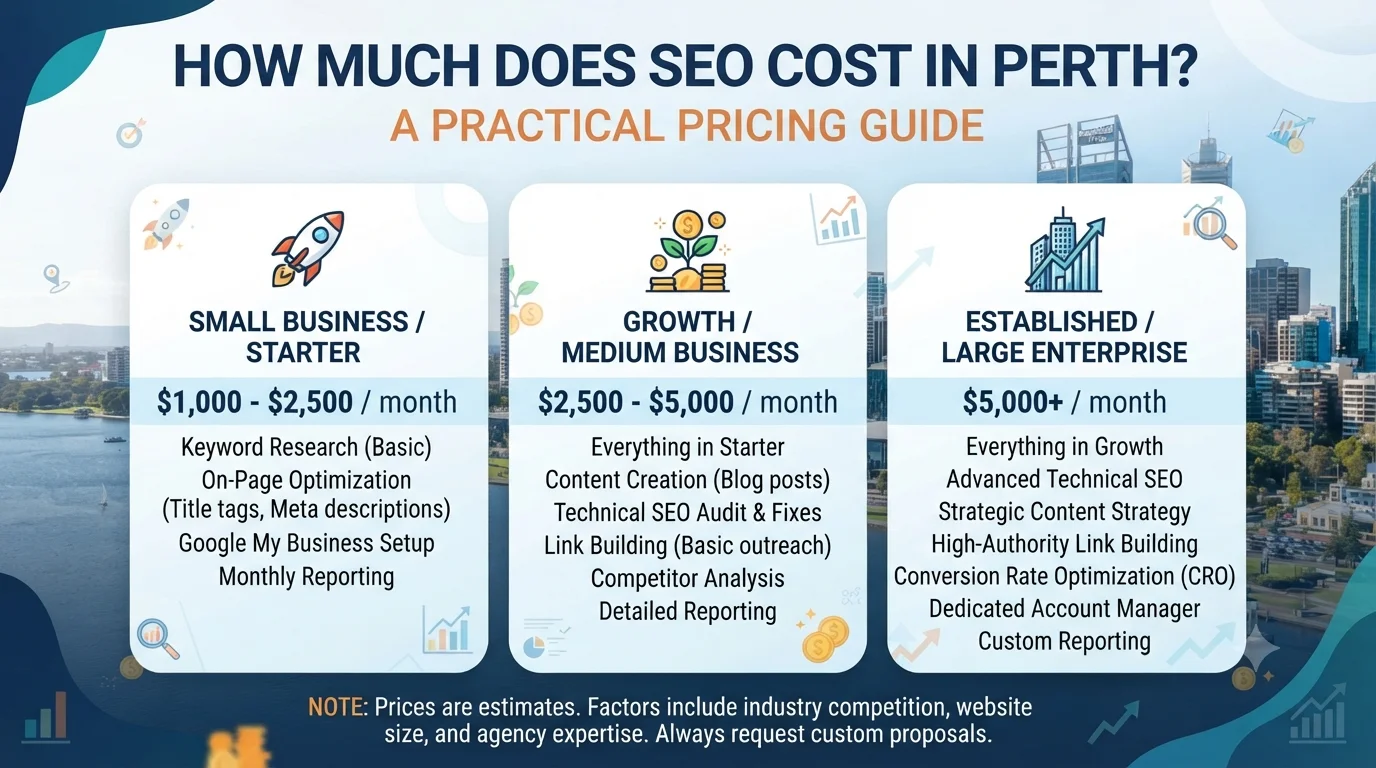
How much does SEO cost in Australia?
SEO costs vary according to the website’s condition, industry competition, scope of work and provider. Technical SEO, content production, local optimisation and ongoing strategy can require different levels of investment. Request a clear proposal that explains deliverables, reporting, responsibilities and fees rather than comparing monthly prices alone.
Does local SEO help businesses get more customers?
Local SEO can help businesses become more visible for relevant searches connected to their service area. Accurate business information, useful location pages and genuine customer reviews can support customer discovery and decision-making. Better visibility does not guarantee a specific number of enquiries or sales.
How long does SEO take to show results?
Some changes may appear in search results within days or weeks, while broader improvements can take several months. The timeline depends on the website, the competition and the work implemented. Track early indicators alongside qualified traffic and enquiries to understand progress.
Can I do SEO without hiring an agency?
Yes. Businesses can manage many foundational tasks themselves, including writing helpful content, improving page titles, checking Search Console and maintaining business information. An experienced specialist may be useful for complex technical work, competitive markets or campaigns requiring more resources.
What is the difference between SEO and Google Ads?
SEO focuses on improving visibility in organic search results, while Google Ads allows businesses to pay for advertising placements through campaigns. SEO can support longer-term organic visibility, whereas paid campaigns can provide traffic while ads are running. Businesses may use both depending on their goals, budget and customer acquisition strategy.
Build a Practical SEO Strategy for Your Business
Growing with Google requires a clear understanding of your customers, a technically accessible website and content that genuinely helps people make decisions. Keyword research, on-page improvements, local SEO and performance measurement should work together rather than operate as disconnected tasks.
For Australian businesses, the most effective priorities depend on the services you provide, the locations you serve and the searches that matter commercially. Start with the most important website issues, improve pages that support your business goals and use reliable data to guide the next steps.
SEO is not a guaranteed shortcut to the top of Google. It is a structured process of improving your website’s usefulness, relevance and discoverability over time.
If your business needs a clearer search strategy, explore Scalvia’s SEO services in Perth to learn more about improving website visibility and attracting relevant customers.